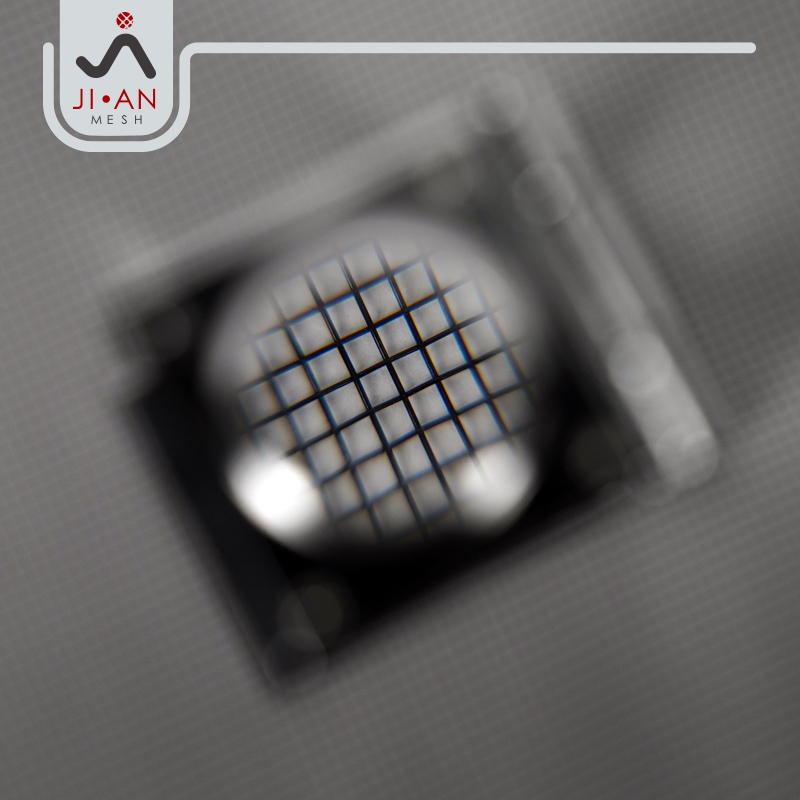
When engineering fenestration systems, fabricators often face a dilemma: "How to reliably block micro-insects like biting midges/gnats (0.5–1.0 mm body length) in humid regions or filter coarse sandstorms, while maintaining optimal natural airflow? Where is the critical equilibrium threshold among 20, 30, and 40 mesh screens?" As a source manufacturer of woven screen meshes, Ji'an Screen Mesh delivers an in-depth breakdown of aperture dimensions, insect cross-sections, and ventilation trade-offs.
1. Core Sizing Logic: Insect Width Determines Barrier Success
Whether an insect can penetrate depends primarily on the actual aperture size relative to the narrowest cross-section of the insect's body, rather than overall body length.
No screen can generically guarantee "blocking 100% of all insects." True performance requires calculating wire diameter, mesh count, aperture size, and local entomological data.
2. Performance Hierarchy: 20, 30, 40, and 48+ Mesh
| Mesh Specification | Typical Aperture Size | Insect & Dust Blocking Capacity | Ventilation & Clogging Risk |
|---|---|---|---|
| 20 Mesh | Approx. 1.0 mm | Blocks standard mosquitoes/flies; cannot reliably block micro midges or gnats | Maximum ventilation; minimal airflow resistance and low dust accumulation |
| 30 Mesh | 0.6–0.8 mm | Blocks larger tiny insects and coarse sand; unstable defense against ~0.5 mm midges | Balanced airflow performance |
| 40 Mesh (Critical Balance) | Approaches ~0.5 mm with optimal wire diameter | The critical threshold balancing micro-midge protection with practical airflow | Moderate airflow resistance; requires routine cleaning |
| 48+ Mesh | Significantly < 0.5 mm | Highest reliability against microscopic biting pests | High air resistance; elevated risk of dust accumulation and clogging |
3. Regional Application Guidelines
Micro-Insect / Gnat-Prone Regions: Start with 40 mesh for balanced airflow. In severe infestation zones, specify 48 mesh with detachable screen designs for easy maintenance.
Sandstorm & Windborne Dust Regions: 30–40 mesh effectively blocks coarse sand grains and airborne debris (Note: not rated for sub-micron PM2.5 filtration). Use 30 mesh for airflow priority; use 40 mesh for dust interception priority.
4. FAQ: Mesh Specification
Q: Is higher mesh count always better?
A: No. Higher mesh increases micro-pest blockage but significantly reduces ventilation and accelerates dust clogging.
Q: Where to consult precise aperture and open-area ratios?
A: Consult Ji'an Screen Mesh for engineered specifications balancing wire gauge, aperture dimension, and airflow efficiency.