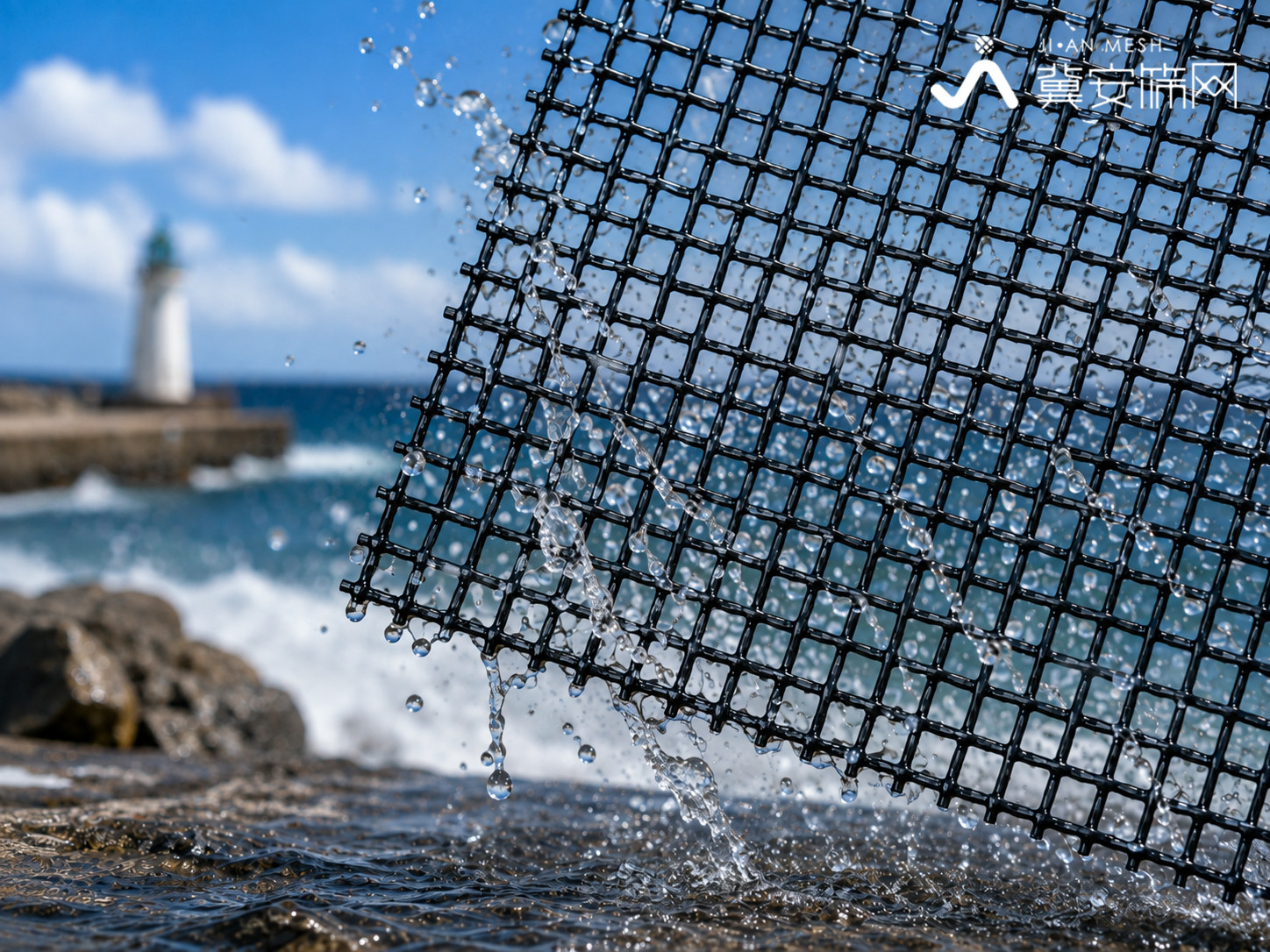
Many distributors and homeowners are puzzled when sourcing window screens: Can security mesh screens effectively block tiny flying insects (such as midges, biting gnats, and sandflies)? What mesh count should be selected? As a professional window screen and security mesh manufacturer, Ji'an Screen Mesh clarifies the reality: security mesh screens cannot block tiny midges. If your primary issue is tiny flying insects, it is critical to avoid common pitfalls and recognize the true application of security mesh.
1. Physical Limitations and Core Value of Security Mesh Screens
| Screen Mesh Type | Key Specifications | Primary Function | Insect Blocking Limit |
|---|---|---|---|
| Security Mesh (King Kong Mesh) | Finest: 0.35 mm wire / 18 mesh; Standard: 0.8–0.9 mm wire / 11 mesh | Safety & Protection: Anti-cut, anti-theft, fall prevention | Blocks standard mosquitoes; cannot block tiny midges and gnats |
| High-Density Non-Metallic Mesh | Ji'an 48-Mesh Functional Screen / Tiantu PET 60-Mesh Screen | Micro-Insect Defense + High light transmission & ventilation | Completely blocks tiny midges, biting gnats, and sandflies |
Physical Limit for Tiny Flying Insects: The densest security mesh available on the market is "0.35 mm wire diameter / 18 mesh." While this aperture effectively stops ordinary mosquitoes, it fails to block microscopic midges and gnats.
Core Value Lies in Safety Protection: Security mesh was never engineered for micro-insect prevention. Its primary function is anti-theft, knife resistance, and preventing children from falling. Therefore, thicker wire diameters offer superior protection (for example, 11 mesh with 0.8 mm or 0.9 mm wire is the preferred security choice).
2. Risks of "Round-Hole Security Mesh": Gimmicks and Health Hazards
Some substandard suppliers promote "round-hole security mesh" claiming superior insect protection. In reality, it poses serious drawbacks:
Severe Airflow and Light Blockage: Round-hole mesh appears dense but significantly impairs natural lighting and indoor ventilation without delivering real micro-insect prevention.
Inferior Coatings and Inhalation Hazards: Premium plasticizer-free powder coatings are ultra-fine and naturally produce "square holes" after spraying. Round-hole meshes are typically produced using low-grade recycled coarse powder containing plasticizers. Over time, these low-quality coatings age and degrade into airborne dust, posing potential respiratory health risks indoors.
3. Source Factory Solutions from Ji'an Screen Mesh: Ultimate Micro-Insect Defense
To completely keep midges and gnats out, the ideal solution is to deploy high-density non-metallic screen mesh (such as Ji'an Screen Mesh 48-Mesh Functional Screen or Tiantu PET 60-Mesh Screen).
Non-metallic materials allow for ultra-fine filament diameters. This ensures complete interception of micro-insects while maintaining a 50% high open-area ratio for bright indoor lighting and smooth airflow.
4. FAQ: Sourcing and Insect Prevention
Q: Can an 18-mesh security screen stop biting midges and gnats?
A: No. While 18 mesh is the physical limit for security wire screens, its aperture remains larger than microscopic midges. For micro-insect defense, high-density non-metallic screens with 48 mesh or 60 mesh should be used.
Q: How can engineering projects balance security with micro-insect protection?
A: We recommend consulting a specialized window screen manufacturer for zoned configurations: use 11-mesh heavy-gauge security mesh for high-altitude anti-fall and security needs, and install Ji'an high-density functional mesh for lower floors or areas with dense vegetation to block micro-insects.