1. Common Symptoms and Root Cause Diagnosis of Screen Mesh Corrosion
Use the following table to quickly identify the corrosion type and its underlying physical causes:
| Corrosion Phenomenon | Affected Location | Primary Cause |
|---|---|---|
| White Oxide (Fading/Powdering) | Contact areas between the screen mesh perimeter and aluminum frames | Bimetallic Corrosion (Galvanic Action): Triggered when screen mesh connects with dissimilar metals (e.g., aluminum, zinc) in humid environments. |
| Reddish-Brown Rust Spots | Central surface area of the screen mesh | Free Oxidation: Caused by insufficient anti-corrosion resistance or damaged protective surface coatings, exposing free metal elements. |
1.1 Diagnostic for "White Oxide" at Mesh Edges
Specific Symptoms: Concentrated at the contact points between the mesh perimeter and aluminum frame strips, appearing as white powder or crystalline residue.
Physical Cause: A classic case of dissimilar metal contact corrosion. When two metals with different potentials meet in humid air, a galvanic cell reaction forms, rapidly precipitating white oxide along the contact interface.
1.2 Diagnostic for "Reddish-Brown Rust Spots" on Mesh Center
Specific Symptoms: Scattered or clustered reddish-brown rust spots appearing in the central area of the screen mesh.
Physical Cause: Commonly caused by poor substrate anti-corrosion performance or coating peeling during processing and weaving, causing free metal elements to oxidize rapidly when exposed to oxygen and moisture.
2. Factory Upgrade Solutions for Fiberglass Screen Mesh
To address these industry-wide pain points, our factory has comprehensively optimized the production and post-treatment processes for fiberglass screen mesh:
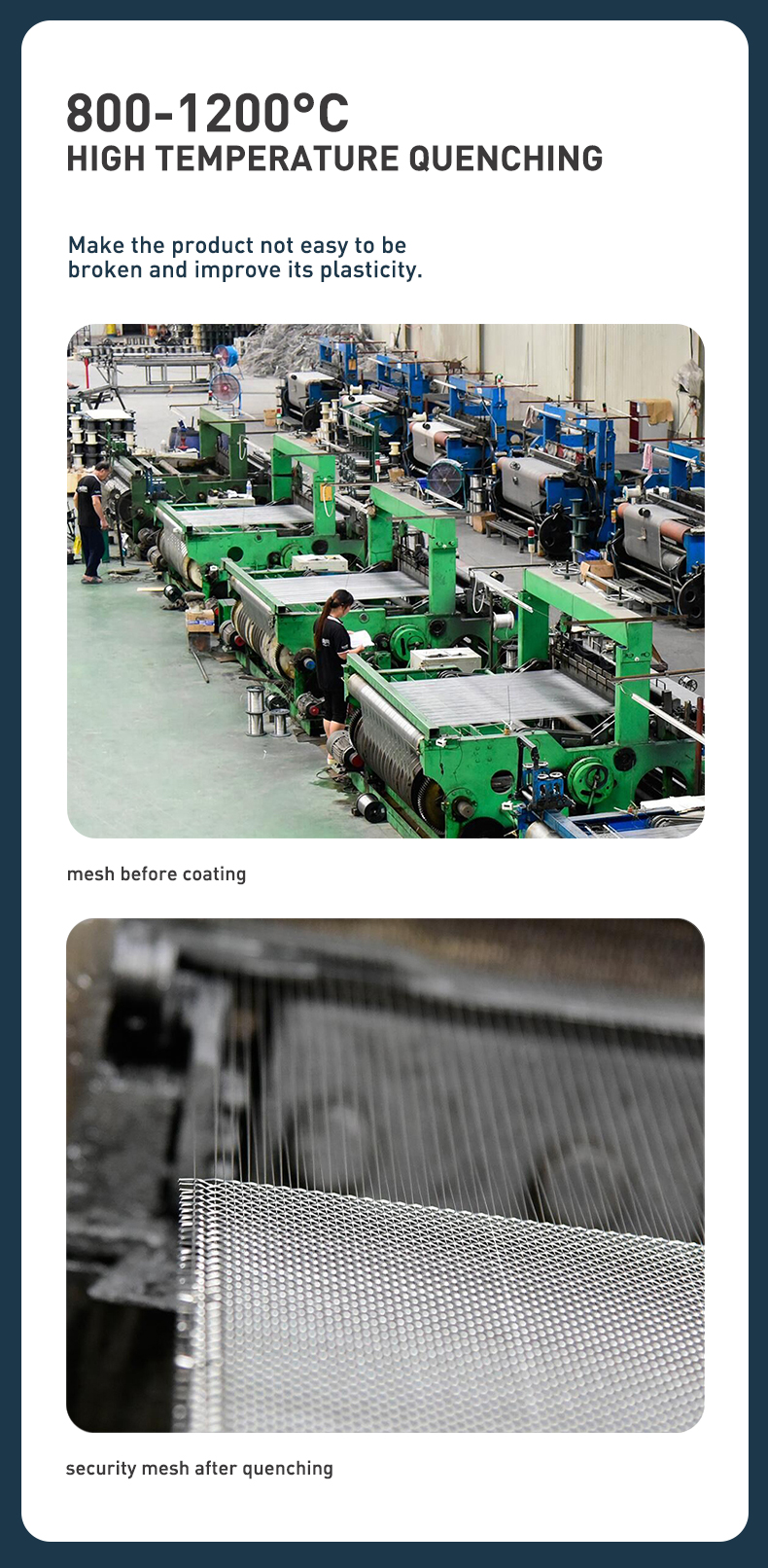
Enhanced Polymer Protective Layer: Utilizing an upgraded polymer coating film process that effectively isolates the mesh surface from air and moisture, completely eliminating reddish-brown rust spots.
Electrochemical Isolation at Contact Surfaces: Upgraded anti-corrosion technology at assembly contact surfaces significantly improves salt spray and electrochemical corrosion resistance, resolving edge-fading issues at the source.
3. FAQ: Frequently Asked Questions
Q: Why does white powder form in the gaps around newly installed screen window edges?
p>A: This is caused by bimetallic corrosion (galvanic action) between the screen mesh and the aluminum frame when exposed to moisture, resulting in white oxide precipitation.
Q: How can screen window rusting and white fading be prevented from the source?
A: Choose high-quality fiberglass screen mesh treated with advanced post-processing anti-corrosion technology, featuring reinforced surface coatings and edge electrochemical isolation to block oxidation pathways.