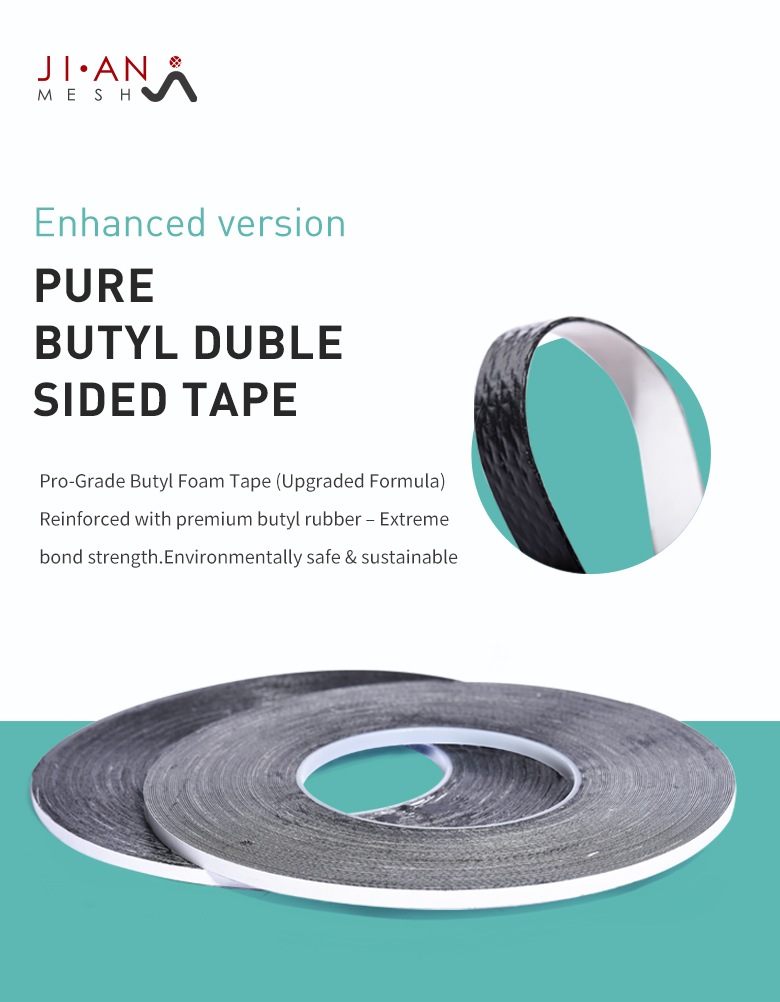
In construction and manufacturing, using the wrong double-sided tape can lead to bond failure and structural detachment. This guide clarifies the critical differences between Butyl, PE, and EVA tapes to ensure reliable results.
1. Understanding the Materials
Butyl Tape
Carrier-free sealant. Best for: Waterproofing, UV resistance, and permanent sealing in curtain walls.
PE Foam Tape
Polyethylene base. Best for: High-temperature stability (120°C), structural fixing of glass and car emblems.
EVA Foam Tape
Copolymer base. Best for: Cushioning and noise reduction. Limit: Temp resistant only to 60°C.
2. Critical Comparison: PE vs. EVA
| Feature | PE Foam Tape | EVA Foam Tape |
| Heat Resistance | -20°C to 120°C | -20°C to 60°C |
| Durability | Waterproof & UV Stable | Prone to aging under heat |
| Application | Structural / Outdoor | Cushioning / Indoor |
⚠️ Technical Insight: Why EVA Fails on Glass Railings?
Outdoor glass temperatures can reach 70-85°C in summer. Since EVA foam softens at 60°C, it loses all structural integrity, causing the glass to slip. Always specify PE Foam Tape for glass and metal structural bonds.
3. Selection Summary
Structural/High-Temp/Outdoor: Use PE Foam or Butyl Tape.
Cushioning/Internal/Indoor: Use EVA Foam Tape.