Sagging Security Mesh in Curved Sashes? It’s Not Always the Material
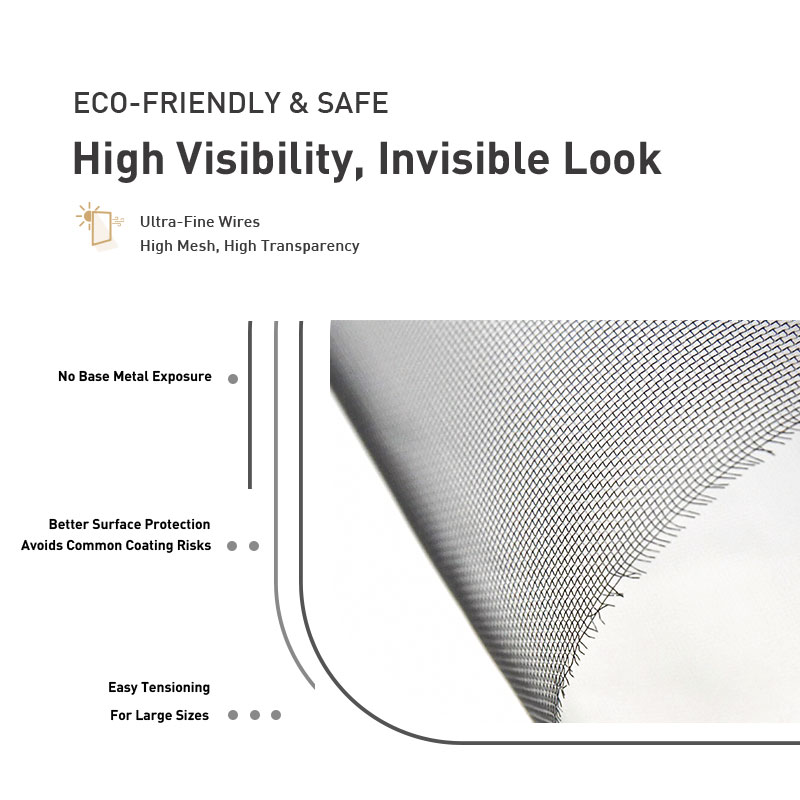
Many fabricators face a common challenge: 0.3mm Security Mesh remains perfectly flat in standard frames but develops waves or sags when used in curved large sashes. Even after replacing screws or using tensioning machines, the result is often disappointing. What is the root cause?
I. The Root Cause: Mismatch Between Profile and Process
Based on our field research with leading brands like Balingma and Ouboman, sagging is rarely a quality defect of the mesh itself. Instead, it is a mismatch between "Profile Structure" and "Installation Technique." When a sash is curved, the stress distribution changes. If the groove design or spline hardness is incorrect, the tension in 0.3mm fine mesh will inevitably fail.
II. Four Steps to Achieve Mirror-Flat Tension
1. Profile Groove Calibration: Verify if the groove depth, width, and R-angle are compatible with large-scale curved structures. Add mid-rails if necessary to control physical deformation.
2. Process Compatibility: Never force a locking method. If a profile is designed for roller tensioning, ensure you use splines with high rebound capacity to maintain long-term tension.
3. Parameter Fine-Tuning: Adjust machine settings—including roller pressure, speed, and sequence—specifically to compensate for tension loss at the curved corners.
4. Technical Training: Ensure frontline operators understand the correct "installation logic" for specific profile designs to avoid sagging during final assembly.
JI'AN Technical Support: Sample Testing Available
Struggling with sagging mesh in curved sashes? Send us your actual profile frames. JI'AN Technical Team will provide standard process demonstrations and sample testing to ensure your 0.3mm mesh remains perfectly flat, stable, and durable.
